
LESSONS
OVERVIEW
Early Electric Blues
(1937-1953)
Lessons Overview → Lesson 1 → Lesson 2 → Lesson 3 → Lesson 4 → Lesson 5 → Lesson 6 → Lesson 7 → Lesson 8
ABOUT THIS SERIES
The Early Electric Blues Guitar Lesson Series is a structured course exploring the rhythm, accompaniment, lead guitar, tone, and musical language of Early Electric Blues (1937–1953).
Rather than teaching isolated licks or songs, this series is designed as a complete system that builds from one lesson to the next. Every concept introduced throughout the course is reinforced and expanded in later lessons, allowing you to develop a deep understanding of how the music actually works.
The goal is not simply to learn what the early masters played, but to understand why they played it.
A DIFFERENT APPROACH
Much of modern guitar instruction begins with lead guitar, scales, and solos.
Early Electric Blues developed in the opposite direction.
The music was built from the bottom up.
Before there were flashy solos, there was rhythm. Before there were licks, there was accompaniment. Before there were effects pedals and large amplifiers, there were small catalogue guitars, modest amplifiers, and musicians learning how to create expression through timing, touch, dynamics, and restraint.
This course follows that same progression.
You'll begin by learning the rhythmic foundation of the style, gradually adding harmony, accompaniment, lead guitar, complete song studies, and finally the subtleties of tone and musical expression that define the recordings of the era.
WHAT YOU'LL LEARN
Across eight lessons you'll develop a complete framework for understanding Early Electric Blues, including:
-
Rhythm guitar and groove
-
Bass movement and accompaniment
-
Chord vocabulary and voice leading
-
Double stops and turnarounds
-
Building lead guitar from chord tones
-
Playing comfortably in multiple keys
-
Complete song studies
-
Ensemble playing
-
Tone production
-
Dynamic control
-
Right-hand technique
-
Musical phrasing and expression
Each lesson builds naturally upon the previous one, allowing the techniques to become part of a unified musical language rather than a collection of unrelated ideas.
BUILT FROM THE RECORDINGS
The material throughout this series is drawn directly from the recordings of the musicians who defined Early Electric Blues between 1937 and 1953, including:
-
Robert Lockwood Jr.
-
Muddy Waters
-
Little Walter
-
Jimmy Rogers
-
Floyd Jones
-
Johnny Shines
-
Baby Face Leroy Foster
-
Moody Jones
-
John Lee Williamson
-
Snooky Pryor
and many more
Rather than copying individual performances note for note, the lessons identify the common musical vocabulary that appears repeatedly throughout the recordings, allowing you to recognize the underlying language shared by many of the great players of the period.
COURSE STRUCTURE
Lesson 1 establishes the rhythmic foundation in the key of E.
Lessons 2 and 3 expand that foundation through accompaniment, chord vocabulary, turnarounds, and melodic ideas.
Lesson 4 applies the system to the key of A while introducing additional rhythm concepts and capo strategies.
Lesson 5 develops lead guitar by building solos from chord tones rather than scale patterns and demonstrates how the system applies in every key.
Lessons 6 and 7 bring everything together through complete studies of Shake Dancer and That's All Right, demonstrating how rhythm, fills, accompaniment, introductions, and solos function within complete performances.
Lesson 8 concludes the series by exploring tone, dynamics, right-hand technique, equipment, musical expression, and the philosophy behind the music.
THE GOAL
The purpose of this course is not to make you sound like someone else.
It is to give you the tools to understand the language of Early Electric Blues so thoroughly that you can begin developing your own voice within the tradition.
Great blues players were never simply copying one another. They shared a common musical vocabulary while expressing their own personalities through timing, touch, phrasing, dynamics, and feel.
That is the tradition this series hopes to preserve.
Next Lesson → Lesson 1
Hear These Ideas in Context
Many of the techniques covered throughout the lesson series can be heard on my recordings.
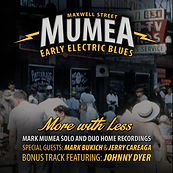


Explore recordings available through Devil's Tale Music.
For over two decades I've independently released recordings dedicated to preserving and celebrating traditional blues through Devil's Tale Music.