

LESSONS
LESSON 8
TONE & TECHNIQUE
Lessons Overview → Lesson 1 → Lesson 2 → Lesson 3 → Lesson 4 → Lesson 5 → Lesson 6 → Lesson 7 → Lesson 8
This lesson is part of the Early Electric Blues Guitar Lesson Series.
For best results, complete all nine lessons in order. Each lesson builds directly on the previous one.

Lesson 8: Refining Tone, Feel, and Expression
Refine the musical voice you've developed throughout the series by exploring the subtle details that bring Early Electric Blues to life. Learn how tone, touch, dynamics, timing, and expressive phrasing work together to create performances that feel natural, conversational, and deeply rooted in the authentic sound of Early Electric Blues (1937–1953).
1:08:47 • Opens on YouTube
OVERVIEW
Lesson 8 concludes the Early Electric Blues Guitar Lesson Series by exploring the elements that define the sound and feel of Early Electric Blues. Rather than introducing new musical vocabulary, this lesson focuses on refining everything you've learned throughout the course through better tone, touch, dynamics, and musical awareness.
Beginning with the equipment used during the late 1940s and early 1950s, you'll see how catalogue archtops, DeArmond pickups, small amplifiers, and simple P.A. systems helped shape the sound of the era. More importantly, you'll discover that great tone is ultimately the product of the player's hands, ears, and musical intent.
WHAT YOU'LL LEARN
You'll learn how to develop expressive tone through touch rather than relying on equipment, using your picking hand to shape attack, dynamics, articulation, and feel. The lesson explores how right-hand position, thumb-and-finger technique, upstrokes and downstrokes, muting, and subtle variations in attack create a wide range of sounds from even the simplest equipment.
We'll also discuss the importance of establishing a broad dynamic range, using restraint to create contrast, and adapting your volume and tone to different rooms, ensembles, and musical situations. Throughout the lesson, the emphasis remains on supporting the song rather than drawing attention to the guitar.
The course concludes by exploring two essential aspects of musicianship that often receive little attention: keeping time physically through your feet and body, and developing your own singing voice. Together, these ideas reinforce the philosophy that Early Electric Blues is built on feel, conversation, space, and expression—not technical complexity.
LESSON CHAPTERS
For easier navigation, these timestamps are also included as clickable chapter links in the YouTube video description.
...
00:00 — 8.0 What Is Tone?
03:32 — 8.1 Early Electric Setup (Archtops & DeArmond Pickups)
06:50 — 8.2 Small Amps
17:38 — 8.3 Philosophy
21:35 — 8.4 Two Approaches
23:31 — 8.5 Acoustic Foundation
27:09 — 8.6 Dynamics
30:16 — 8.7 Amp Settings
36:39 — 8.8 Dynamic Range
40:07 — 8.9 Right Hand
44:24 — 8.10 Tone Shaping
52:03 — 8.11 Thumb & Fingers
58:25 — 8.12 Up/Down Strokes
1:03:14 — 8.13 Time & Voice
...
KEY TAKEAWAYS
Great tone begins with the player, not the equipment. While the guitars, pickups, and amplifiers of the era each contributed to the sound of Early Electric Blues, the defining qualities came from touch, timing, dynamics, and musical restraint.
Throughout this series, you've built a vocabulary of rhythms, accompaniment, lead playing, and complete song arrangements. This final lesson demonstrates how those individual skills become music through careful control of dynamics, thoughtful phrasing, and a commitment to supporting the overall performance.
The objective is not to play more notes, but to communicate more with every note you choose to play.
CONTINUE THE SERIES
Congratulations on completing the Early Electric Blues Guitar Lesson Series.
The next step is to apply these concepts to the original recordings. Listen carefully to the masters, play along with them often, and continue refining your timing, touch, tone, and phrasing. Over time, these ideas become less about individual techniques and more about developing your own authentic musical voice.
Questions?
If something in this lesson isn't clear, feel free to leave a comment on YouTube or reach out through the contact page.
Hear These Ideas in Context
Many of the techniques covered throughout the lesson series can be heard on my recordings.
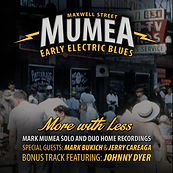


Explore recordings available through Devil's Tale Music.
For over two decades I've independently released recordings dedicated to preserving and celebrating traditional blues through Devil's Tale Music.