

LESSONS
FOUNDATIONS: MY APPROACH
Building Early Electric Blues from the Bottom Up
Introduction → Lesson 1 → Lesson 2 → Lesson 3 → Lesson 4 → Lesson 5 → Lesson 6 → Lesson 7 → Lesson 8
This lesson is part of the Early Electric Blues Guitar Lesson Series.
For best results, complete all nine lessons in order. Each lesson builds directly on the previous one.

Introduction: Foundations of My Approach
An introduction to the philosophy behind the Early Electric Blues Guitar Lesson Series. Discover why this course is built from the bottom up and how the musical principles developed between 1937 and 1953 continue to shape the lessons that follow.
28:27 • Opens on YouTube
OVERVIEW
Most players begin learning this music from the top down—starting with licks, solos, and individual ideas. Early Electric Blues developed in the opposite direction.
This introductory lesson establishes the philosophy and foundational approach that guides the entire lesson series. Rather than treating rhythm and lead as separate skills, you'll learn how the earliest electric blues guitarists blended accompaniment, movement, dynamics, and phrasing into a single musical responsibility.
The goal isn't to play more notes—it's to develop better time, stronger feel, greater control, and a deeper understanding of how this music functioned in small clubs, storefronts, house parties, and street corners between 1937 and 1953.
Throughout this series, the emphasis is on building the music from the bottom up. The groove always comes first.
WHAT YOU'LL LEARN
You'll develop a steady foot pulse and physical sense of time while learning two-string rhythm patterns, double stops, supportive phrasing, single-note fills, dynamics, touch, attack, equipment philosophy, and how to study the foundational recordings that shaped Early Electric Blues.
...
LESSON CHAPTERS
00:06 — Lesson Demo
02:31 — Introduction to the Early Electric Blues Approach / Philosophy
FOUNDATION
03:11 — Foot Pulse & Physical Time
04:46 — Building a Steady Bottom End
05:08 — Two-String Rhythm with Variations
05:45 — Adding Open High E on Top
06:15 — Adding 7th Chords
06:33 — Adding Hammered 3rds
07:03 — Combining 7ths & Hammered 3rds
07:16 — Walking into 7th Chord with Double Stop Lick
07:31 — Walking into 7th Chord over the IV with Double Stop Lick
07:45 — Foundation Recap #1
ADDING MORE MOVEMENT WITH DOUBLE STOPS
08:11 — Example #1
08:38 — Example #2 (Robert Lockwood Jr.)
08:50 — Combining #1 & #2 (Lockwood Style)
09:08 — Example #3 (Jimmy Rogers Style)
09:25 — Example #4 (Jimmy Rogers Style)
09:40 — Double Stop Recap #2
09:54 — Example #5 (Over the IV & V)
10:28 — Double Stop Recap #3
ADDING CHORDS
11:00 — Sliding 9ths
11:23 — Combining Chords
ADDING TURNAROUNDS
11:37 — Turnaround #1
11:54 — Turnaround #2 with Variations
12:21 — Turnaround #3 — Adding Single Notes (Robert Lockwood Jr. Style)
ADDING SINGLE NOTE FILLS ANCHORED TO RHYTHM
12:34 — Lick #1
12:47 — Lick #2
12:57 — Single Note Recap #4
PHILOSOPHY / DYNAMICS / ATTACK
14:06 — Philosophy / Dynamics / Attack / Concealing a Pick
16:58 — Tremolo Picking Technique with a Pick
17:42 — Combining Low Single Notes with Fingerstyle
18:32 — Low Notes Ringing Against High Notes
19:33 — Right Hand Technique / Attack
21:40 — Dynamics & Technique Recap #5
EQUIPMENT
25:16 — Equipment & Setup
LISTENING / STYLE PHILOSOPHY
26:51 — Foundational Recordings & Listening Approach
CLOSING
27:32 — Closing Statements
...
KEY TAKEAWAYS
Early Electric Blues is built from the bottom up. Rhythm and time come first, and everything else grows naturally from that foundation.
The guitar's primary role is to support the song through groove, dynamics, and tasteful accompaniment rather than dominate it.
Rhythm and lead are not separate concepts. They work together as one continuous musical language.
Developing control, touch, and restraint will have a greater impact on your playing than memorizing dozens of licks.
The original recordings remain the greatest teachers. Listen carefully, study them often, and allow the music itself to shape your approach.
CONTINUE THE SERIES
Next Lesson → Lesson 1: Building the Foundation
Questions?
If something in this lesson isn't clear, feel free to leave a comment on YouTube or reach out through the contact page.
Next Lesson → Lesson 1
Hear These Ideas in Context
Many of the techniques covered throughout the lesson series can be heard on my recordings.
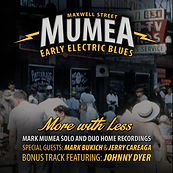


Explore recordings available through Devil's Tale Music.
For over two decades I've independently released recordings dedicated to preserving and celebrating traditional blues through Devil's Tale Music.