
LESSONS
LESSON 7
THAT'S ALL RIGHT – JIMMY ROGERS
Lessons Overview → Lesson 1 → Lesson 2 → Lesson 3 → Lesson 4 → Lesson 5 → Lesson 6 → Lesson 7 → Lesson 8
This lesson is part of the Early Electric Blues Guitar Lesson Series.
For best results, complete all nine lessons in order. Each lesson builds directly on the previous one.

Lesson 7: Integrating the Complete Style
Bring together the concepts developed throughout the series into a complete and cohesive approach to Early Electric Blues guitar. Learn how rhythm, accompaniment, lead playing, dynamics, tone, and musical conversation work together to create performances that are expressive, relaxed, and rooted in the authentic sound of Early Electric Blues (1937–1953).
43:02 • Opens on YouTube
OVERVIEW
Lesson 7 applies the concepts developed throughout the series to one of the defining songs of Early Electric Blues, "That's All Right." Popularized by Jimmy Rogers, this lesson demonstrates how introductions, vocal accompaniment, and lead playing work together within a complete performance.
Working through the song from beginning to end, you'll learn how each section contributes to the overall performance, from the signature introduction through the vocal accompaniment and into the guitar solo. Rather than treating each idea independently, you'll begin to understand how rhythm, phrasing, dynamics, and structure combine to support both the song and the vocalist.
WHAT YOU'LL LEARN
You'll begin by learning the signature introduction, exploring the use of double-stops, IV and V chord movement, the turnaround, and how these elements establish the character of the performance.
From there, you'll examine how the guitar supports the vocal through tasteful chord work, bass movement, and well-placed fills that reinforce the groove without becoming distracting. The lesson concludes with a complete breakdown of the solo, demonstrating how expressive lead playing develops naturally from the same chord-based framework introduced throughout the earlier lessons.
You'll also explore the history of the song, tracing its development from Robert Lockwood Jr. through Othum Brown and Little Walter before its later interpretation by Jimmy Rogers, providing historical context for one of the most influential songs in Early Electric Blues.
LESSON CHAPTERS
For easier navigation, these timestamps are also included as clickable chapter links in the YouTube video description.
...
00:00 — Lesson 7 Demo
00:24 — 7.1 Origins
02:32 — 7.2 Opening Double Stops
04:25 — 7.3 IV Chord
06:38 — 7.4 V Chord
07:58 — 7.5 Intro Turnaround
10:12 — 7.6 Intro Recap
10:39 — 7.7 Adding Bass
13:08 — 7.8 Backing Vocal
16:40 — 7.9 V Phrasing
18:21 — 7.10 Solo Pt. 1
20:38 — 7.11 Solo Pt. 2
23:17 — 7.12 Solo Recap
25:11 — 7.13 Chicago Sound
27:21 — 7.14 Recordings
29:50 — 7.15 Ora Nelle
32:48 — 7.16 Intro Comparison
35:01 — 7.17 Othum Brown
37:27 — 7.18 Lockwood
...
KEY TAKEAWAYS
Complete performances are built from the same principles developed throughout the earlier lessons. Strong rhythm playing, thoughtful accompaniment, and expressive lead work are not separate skills—they are different applications of the same musical language.
The guitar's primary role remains one of support. Well-placed fills, tasteful chord movement, and carefully controlled dynamics strengthen the vocal while maintaining the relaxed groove that defines Early Electric Blues.
Understanding the historical development of songs like "That's All Right" provides valuable insight into how this style evolved and how the contributions of musicians such as Robert Lockwood Jr., Othum Brown, Little Walter, and Jimmy Rogers became part of the foundation of Chicago blues guitar.
CONTINUE THE SERIES
Lesson 8 concludes the series by exploring the finer details of tone production, dynamics, right-hand technique, equipment, and musical expression. Rather than introducing a new vocabulary, it focuses on refining everything you've learned throughout the course, helping you develop a more personal, relaxed, and expressive approach to Early Electric Blues guitar.
Questions?
If something in this lesson isn't clear, feel free to leave a comment on YouTube or reach out through the contact page.
Next Lesson → Lesson 8
Hear These Ideas in Context
Many of the techniques covered throughout the lesson series can be heard on my recordings.
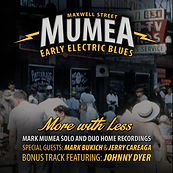


Explore recordings available through Devil's Tale Music.
For over two decades I've independently released recordings dedicated to preserving and celebrating traditional blues through Devil's Tale Music.